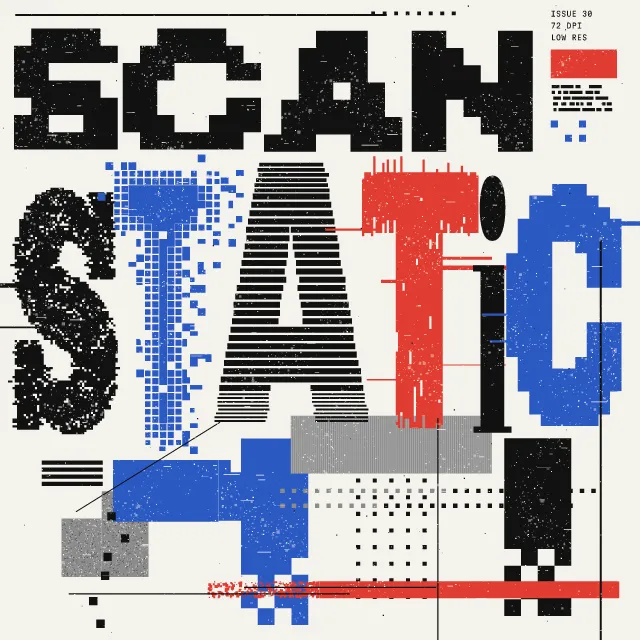
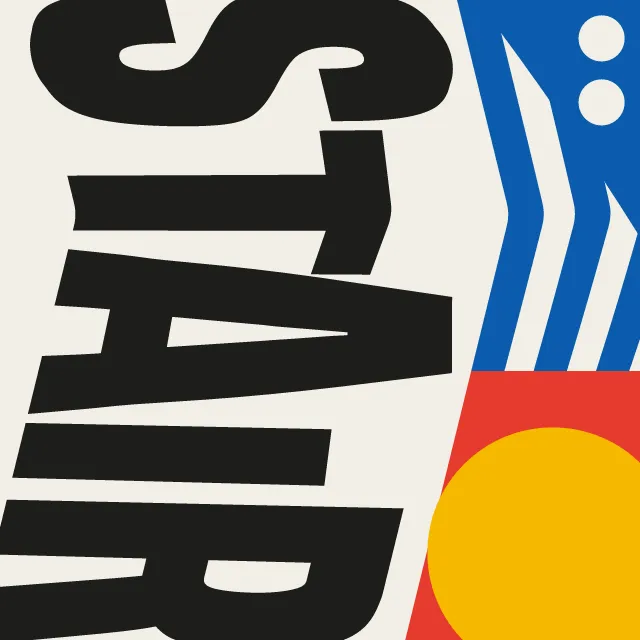
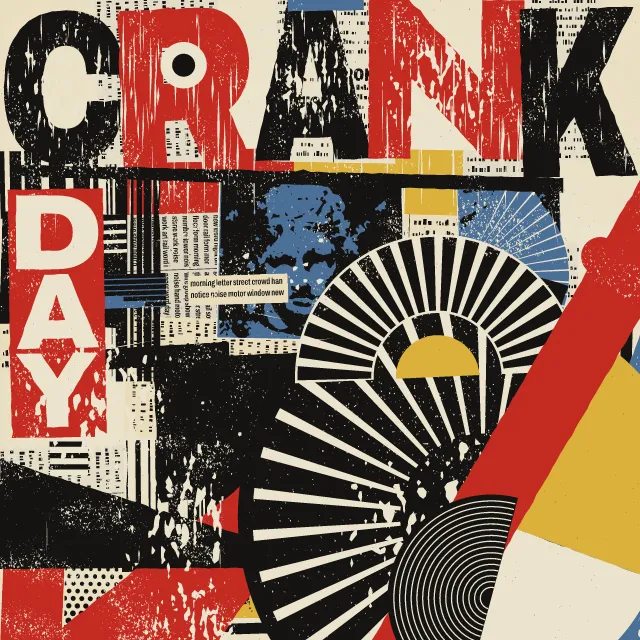
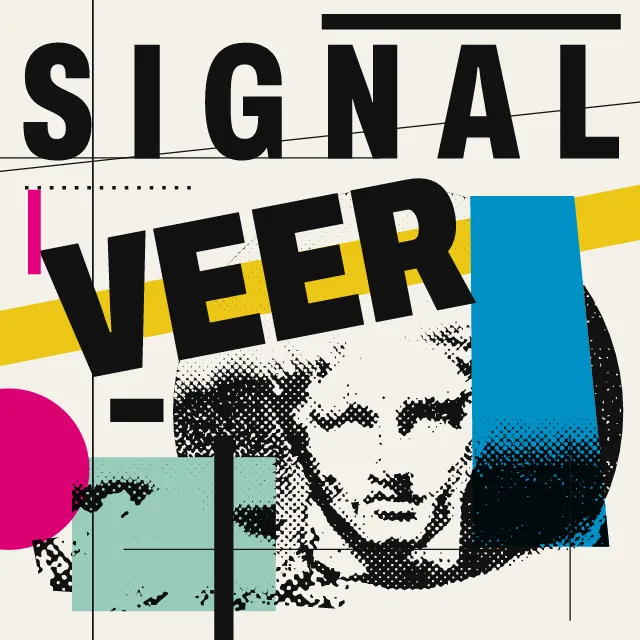
Packed label sheets for firms that do not exist: a wide masthead, one heavy emblem, colour tiles of pictograms, invented maps, scopes and charts.
What makes it Techno-futurism
These are the design choices this generator makes or lets you set. Where a choice says “Measured”, Morphogeny changed that control alone, kept everything else, and measured the picture: a number that moves with the choice, not proof that the picture reads as the style.
- Content held in borders, cartouches or compartments. “Arrangement”: Label stack.
- Lines set at angles, stacked or running vertically. “Arrangement”: Side rail.
- Content partitioned into rounded tiles or cards of varied size. “Arrangement”: Tiles.
- Very large against very small elements, for drama and order. “Arrangement”: Cropped emblem.
- Charts, maps, isotypes, technical drawings. “Arrangement”: Console.
- Image or colour runs off every edge; no protective margins. “Arrangement”: Full-bleed bands. Measured on the opening picture: ink at the edges 80% with “Full-bleed bands”, and 44% to 53% with the other options.
- Seals, crests, roundels and badges. Set by “Emblems & badges”.
- Many saturated hues at once. “Colour roles”: First ink leads.
- Two or three flat inks. “Colour roles”: One ink only. Measured on the opening picture with “One ink only”: hues besides black, white and grey 1.
- A single hue, or black and white. “Colour roles”: No inks. Measured on the opening picture with “No inks”: hues besides black, white and grey 0.
- Reduced, systematic signs. Always.
- No simulated depth or texture. Always.
- Systematic icon families. Always.
- Capitals for monumentality, order or shouting. Always.
- Speed, machines, progress and the future. Always.
- Quotation, pastiche and knowing exaggeration. Always.
How this generator works
- Packs a sheet from hard-edged bands and panels like an equipment label: one ultra-wide name, one heavy emblem, colour tiles of pictograms and a map, scope or chart panel, with tiny tracked capitals in the slivers.
- Six arrangements and a pool of pieces fit whatever box they get, so variations differ in composition as well as in colour, and flat process colours stay flat.
- In motion only the emblem’s rings and swoosh turn, the routes trace and the scope sweeps; the rest of the sheet holds still.
What it never does:
- No real brand, flag or firm’s mark and no second script of its own: names, icons and emblems are invented and generic.
- No real map or real data: the land comes from noise, the numbers are made-up cell references and each panel’s tag says it is not real. No gradients or textures.
Every picture is a recipe: the variation number and the settings, kept in the page's address. Copy the link and the same picture comes back, in any browser. Random (or R) draws a new variation; ← and → step through them; S shuffles the settings; C borrows another style's colours.
About Techno-Futurist Graphics
Techno-futurist graphics took the grammar of corporate identity in the late 1980s and 1990s, the logos, pictograms, product codes and warning labels, and made fictional brands with it for electronic music and video games. The surfaces are flat and crisp, in candy brights on white or silver, and information is packed in until it becomes ornament. The tone is half celebration, half joke.
This generator builds each sheet from bands and panels. An arrangement divides the page, as a label stack, a side rail, tiles, a cropped emblem, a console or full-bleed bands, and a pool of pieces fills whatever boxes result: tiles, lists, barcodes, dials, slanted bars. Name, emblem, colour roles, panel and density are yours to set.
Everything is invented. The emblems belong to nobody, the land on the maps comes from noise and matches no coast, and the numbers mean nothing: each panel carries a tag that says so. In motion the emblem’s rings and swoosh turn, routes trace and the scope sweeps, while the rest holds still.
Techno-Futurist Graphics: 1986–2002. What the controls mean: Help.
Use it from code
The recipe below draws the picture this page opens with. Copy recipe gives you the one on screen. Agents can render recipes to SVG or PNG through Morphogeny's MCP server (morphogeny_render); the same recipe always gives the same SVG.
{
  "tool": "techno-futurism",
  "v": 1,
  "seed": 51,
  "format": "portrait",
  "params": {
    "name": "",
    "tagline": "",
    "arrangement": "any",
    "emblem": "any",
    "roles": "first",
    "panel": "any",
    "density": 0.7,
    "effect": "all"
  },
  "palette": "techno-futurism"
}
Open this recipe: /techno-futurism/#seed=51&v=1. A plain-text version of this page:/techno-futurism.md.