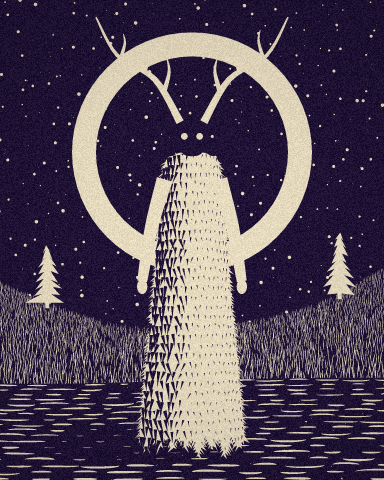
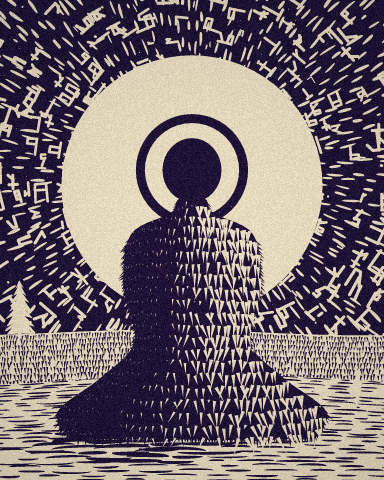
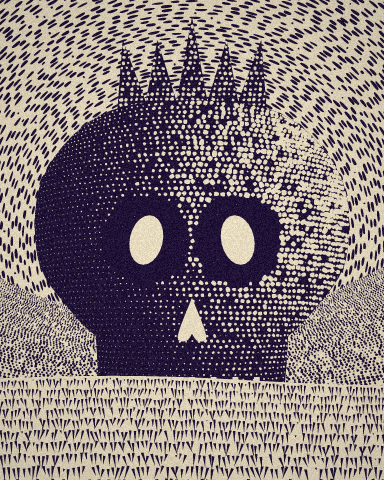
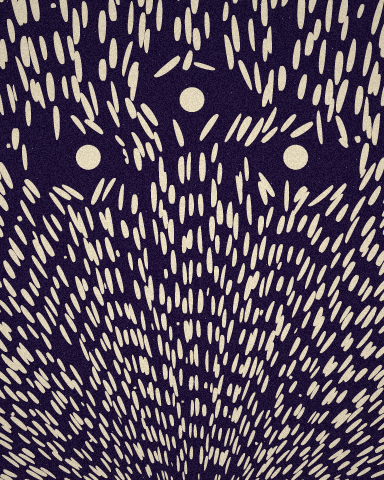
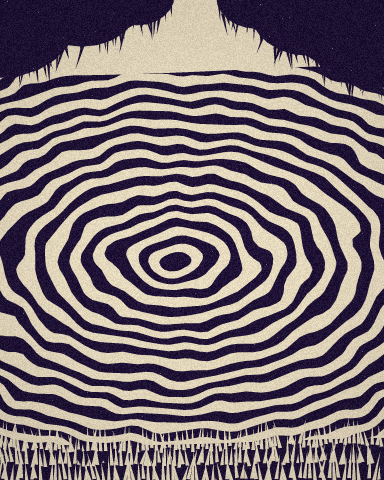
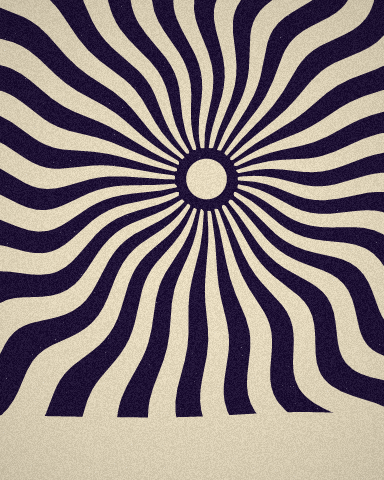
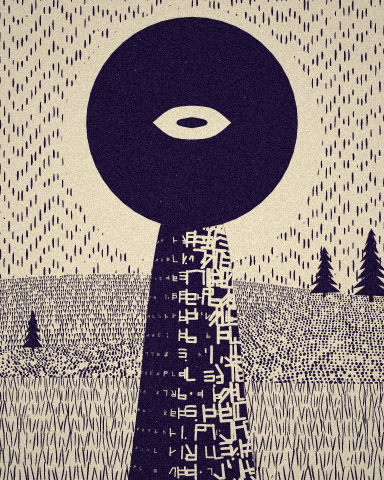
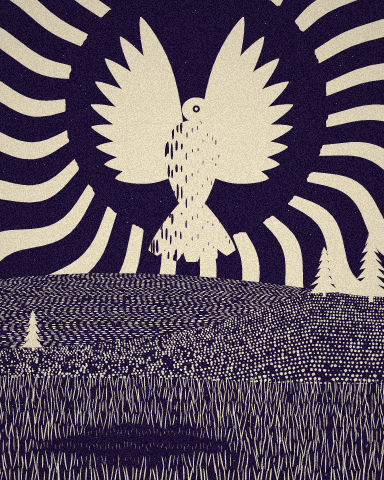
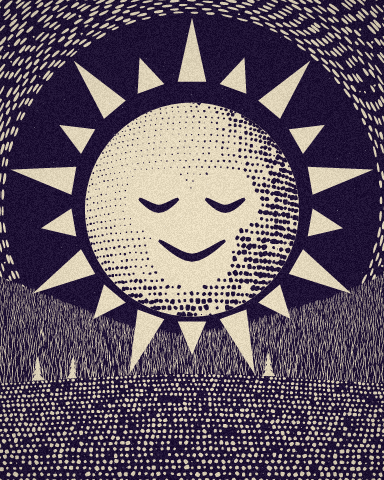
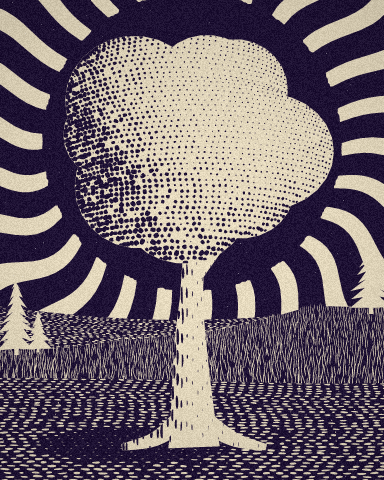
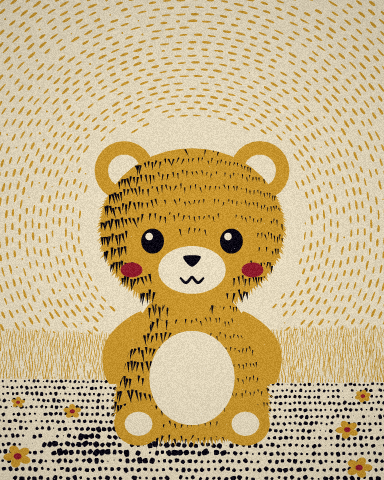
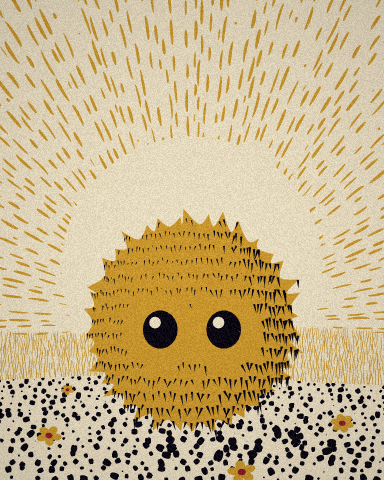
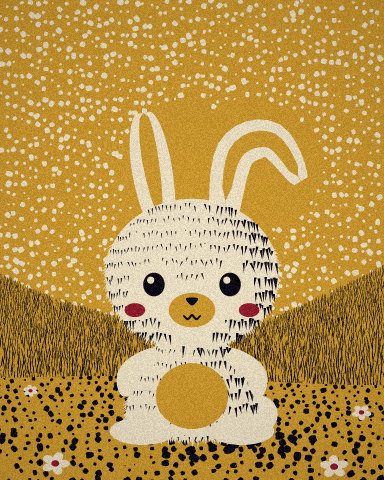
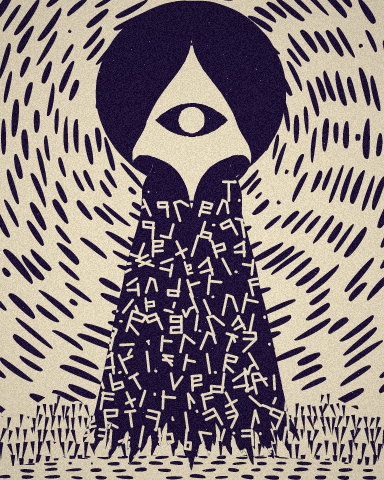
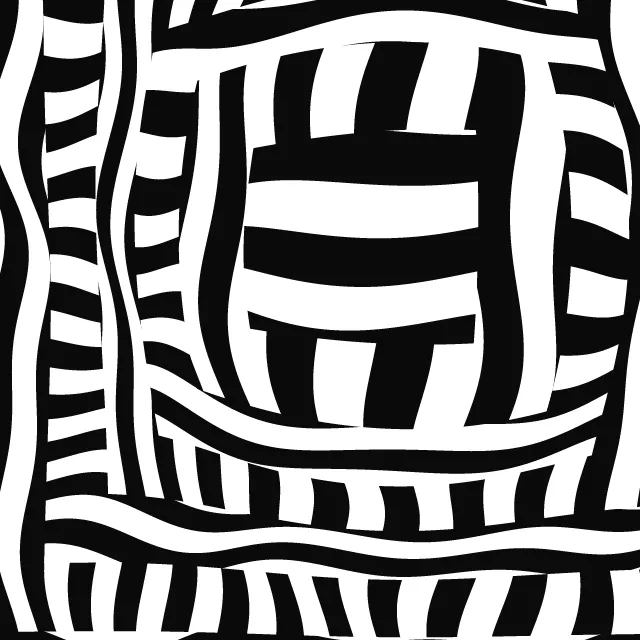
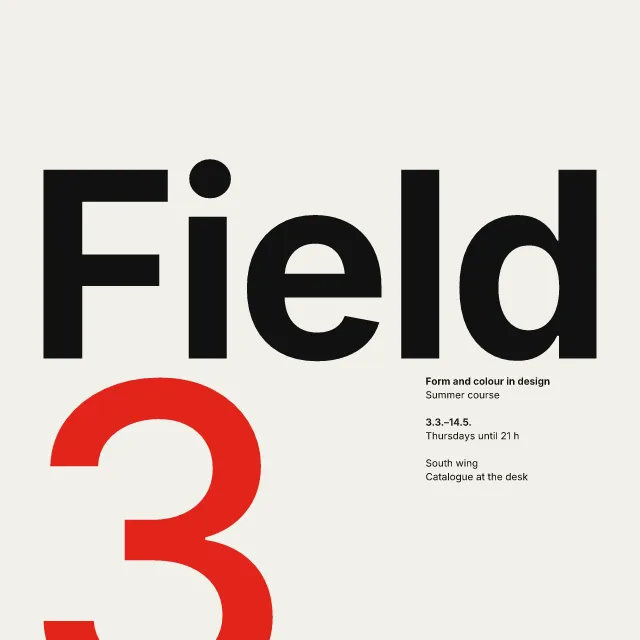
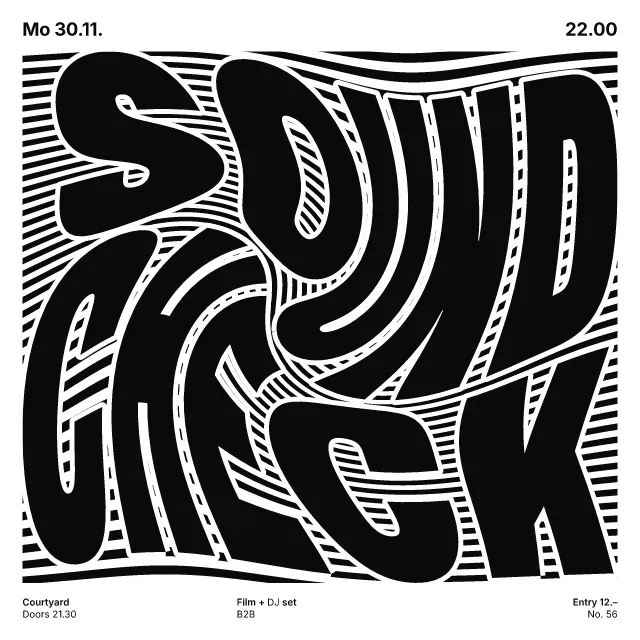
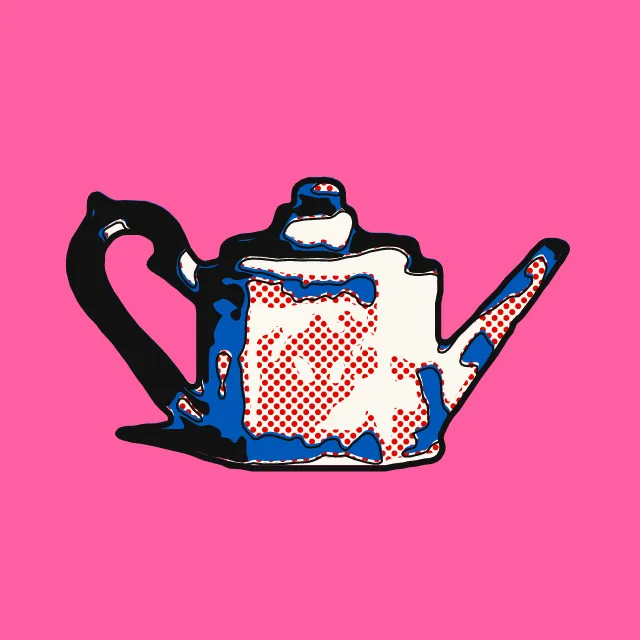
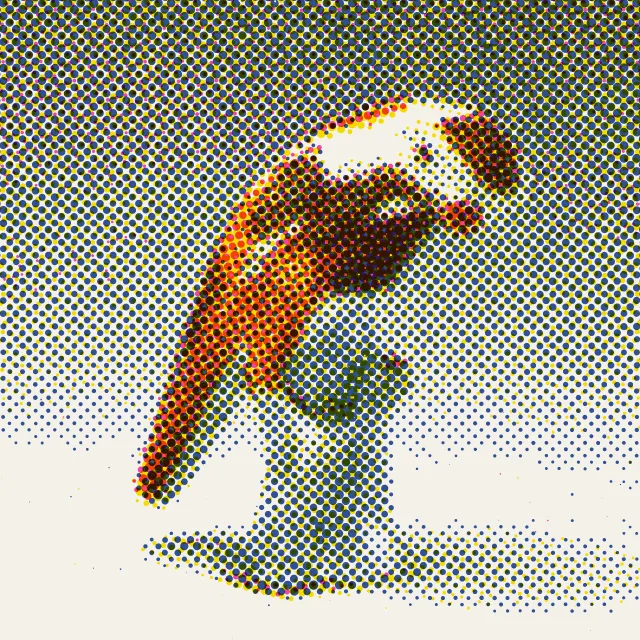
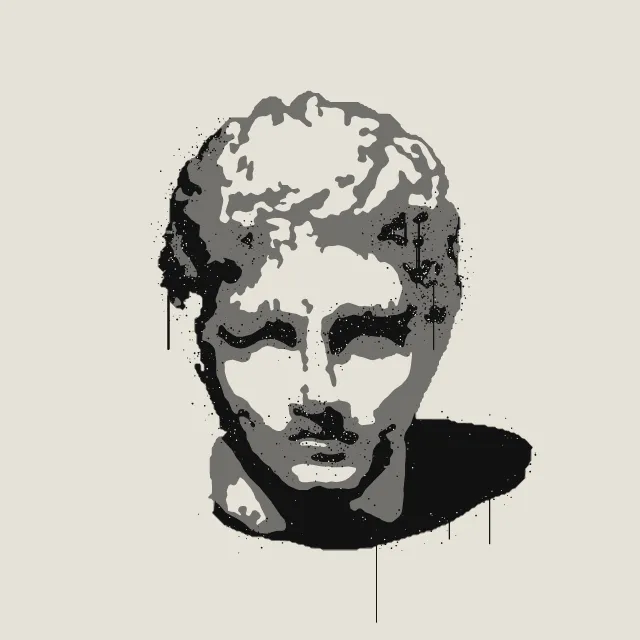
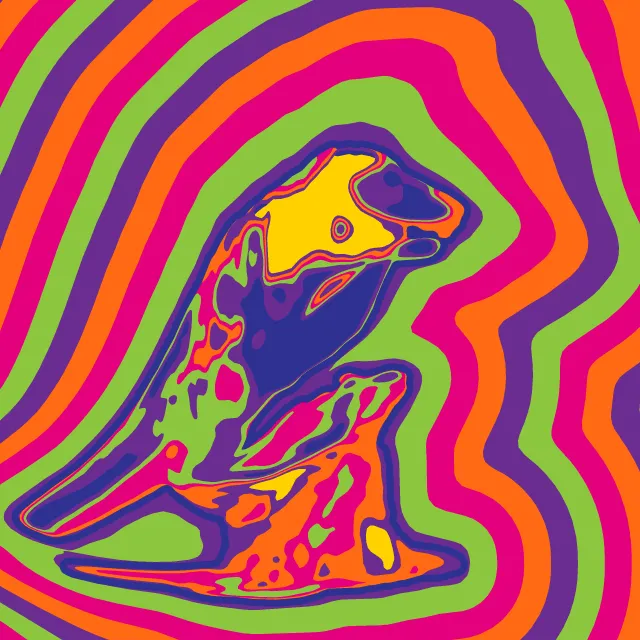
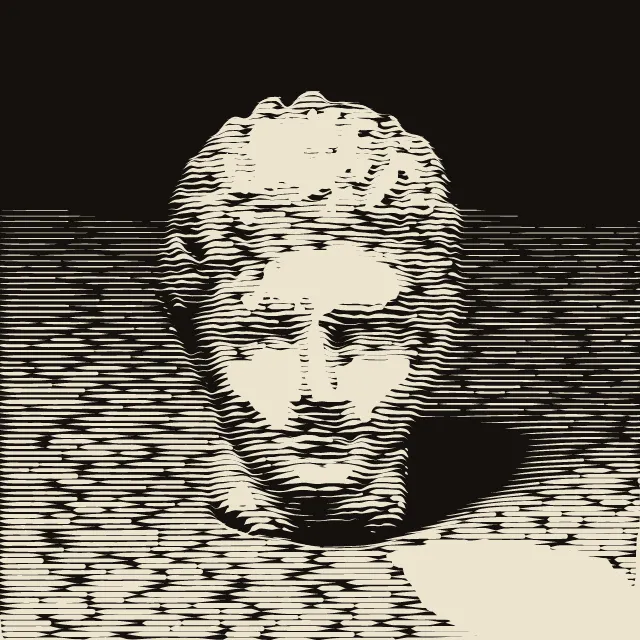
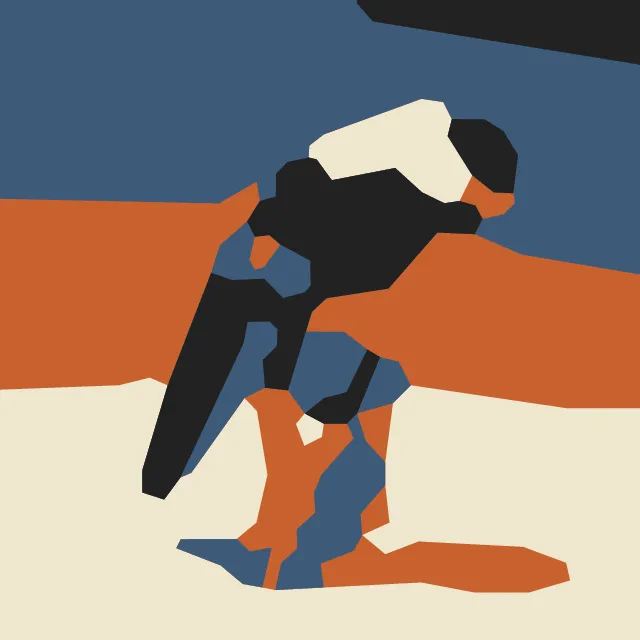
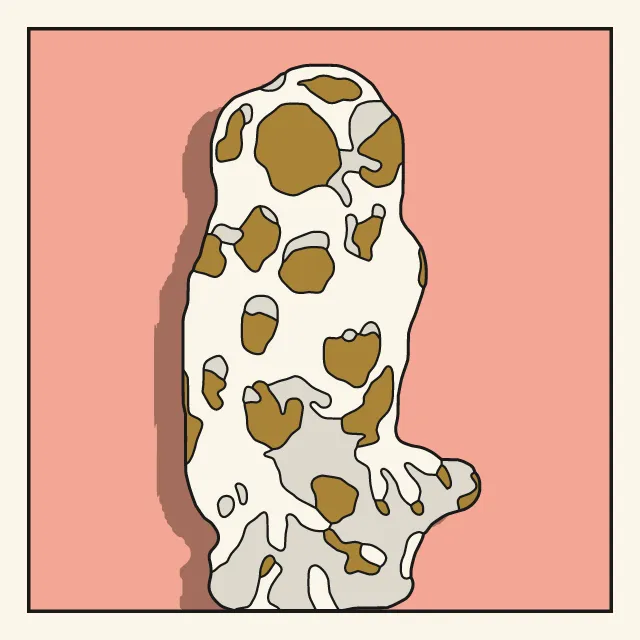
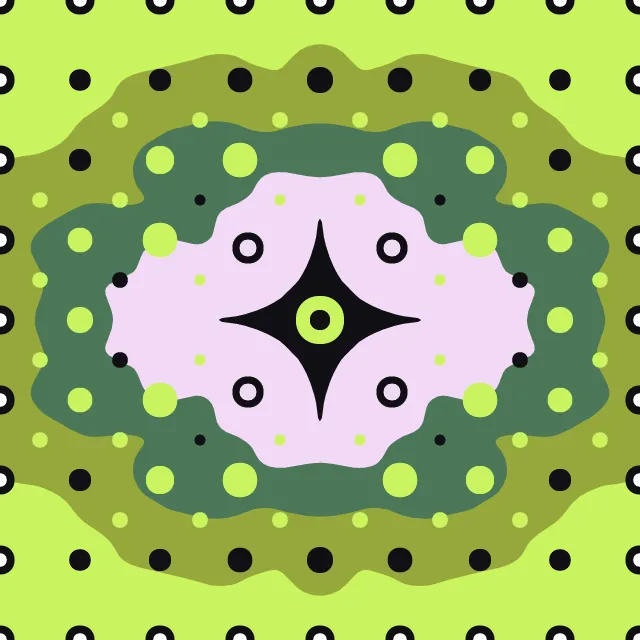
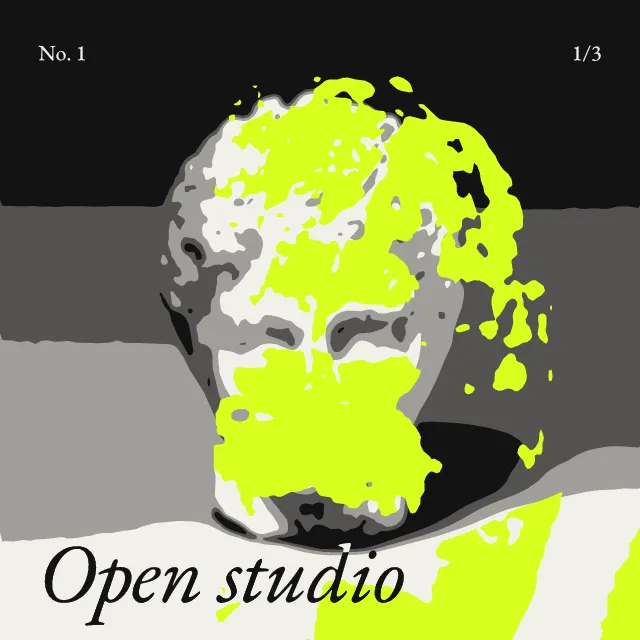
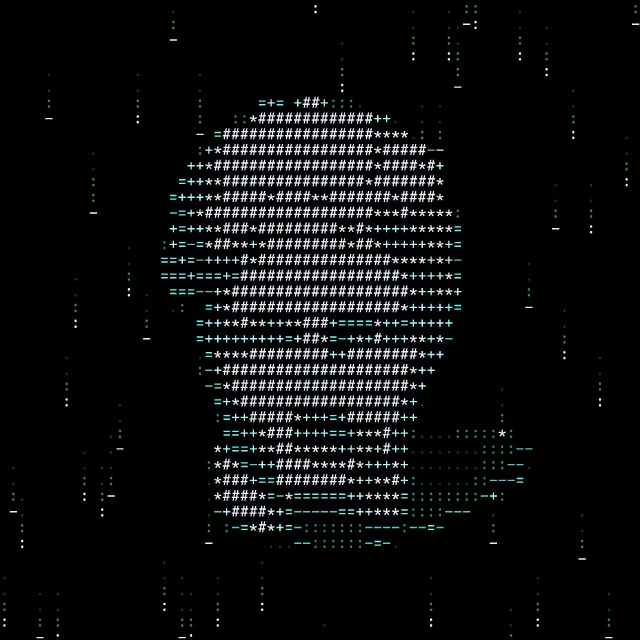

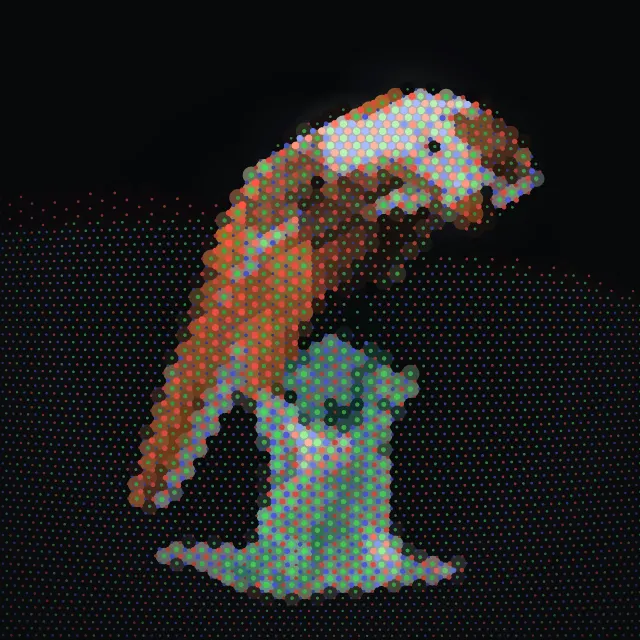
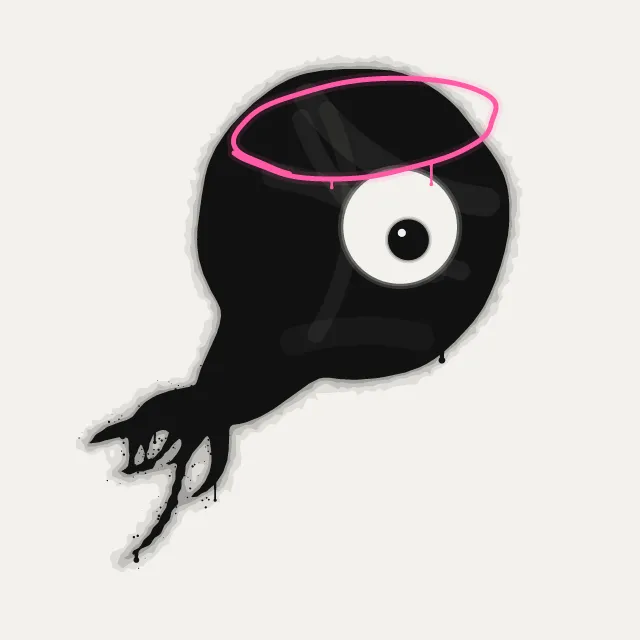
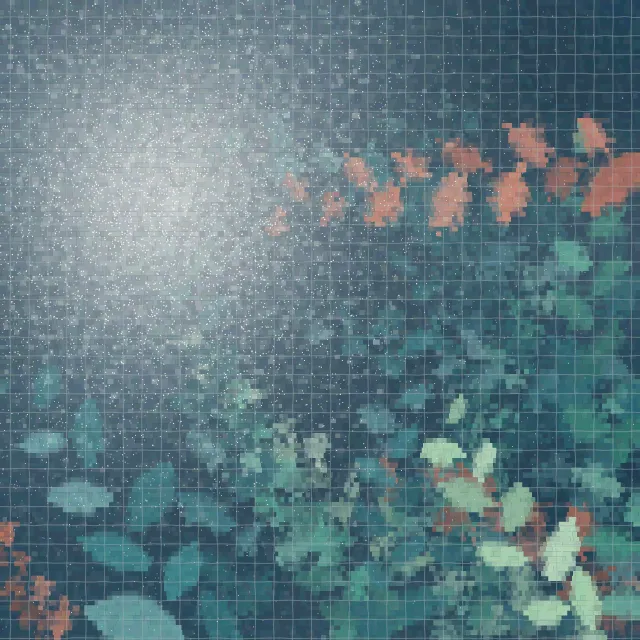
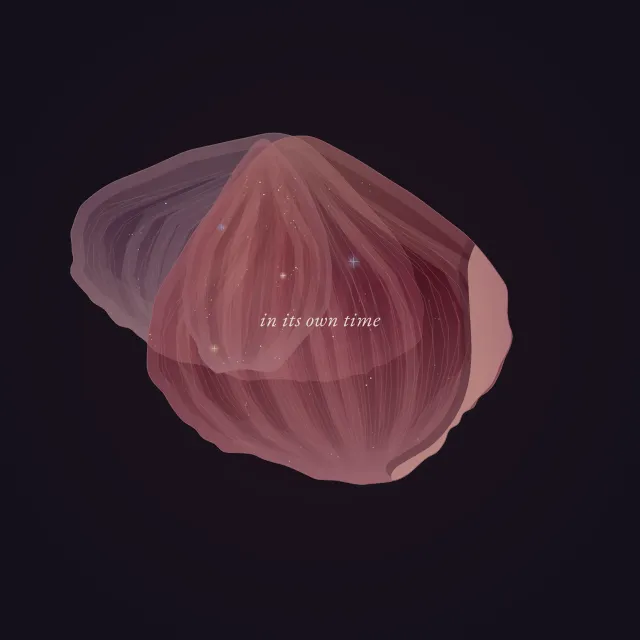
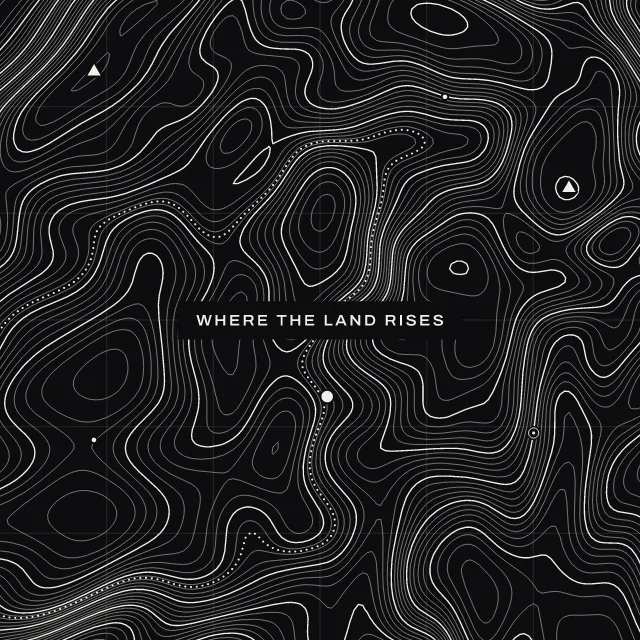
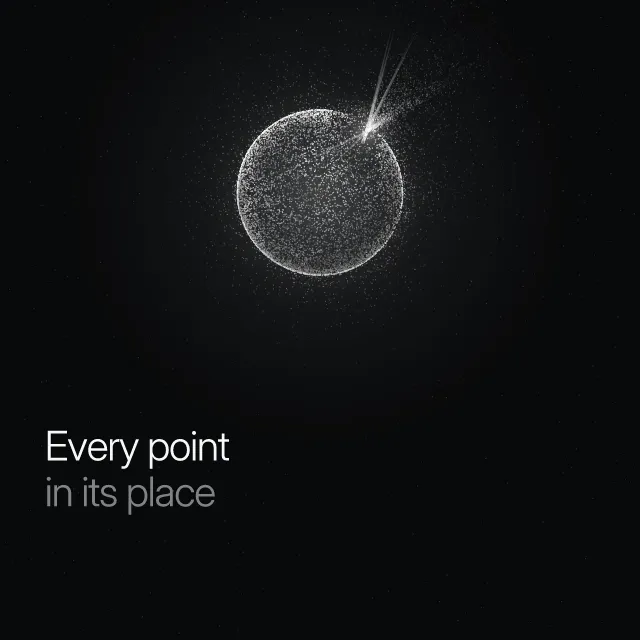

A figure made of bold brush marks, no outlines, lit from one side: strange in a dark land, holy before a sky of rays, or a small cute animal. The sky moves.
What makes it Gig Poster
These are the design choices this generator makes or lets you set. Where a choice says “Measured”, Morphogeny changed that control alone, kept everything else, and measured the picture: a number that moves with the choice, not proof that the picture reads as the style.
- Simplified, flattened people and objects. “Figure”: Invented.
- Duotone, high-contrast or posterised photographs. “Figure”: From a photo.
- One unmistakable point of entry. “Scene”: A figure in a landscape.
- Two or three flat inks. Set by “Limited spot colours”.
- Unmodulated areas of colour. Always.
- Flat stencil-printed inks, often opaque or fluorescent. Always.
How this generator works
- No outlines: every flat shape (sky, hills, body, head, eyes) is filled with bold brush marks laid in order, in another of its inks: rays leaving the face, rings round a sun, dashes pouring down a robe, rows of invented script, grass in rows that follow the hills and grow towards the viewer. Light falls from one side: marks are larger where it lands on a figure and smaller in its shadow, rows wrap round the body, cloth creases from the shoulders, and the figure throws a shadow on the ground.
- One figure, frontal on the picture’s axis and large in the frame, alone in its land, often before a sun or inside a ring; or a face that fills the frame, rising behind the land. Uncanny, holy or cute: strange figures in a dark land, kind ones made of light (a radiant one, a dove, a tree, a sun with a face) before a sky of rays, or small round animals with bead eyes among flowers. Land holds still; the sky, the light behind the head and the cloth move one place per loop, and the loop closes.
What it never does:
- No outlines or gradients: light and shade come from the size of the marks alone. No lettering, band names, film characters or logos; no real alphabet in the script.
- No recognisable artist’s figure or poster reproduced, and no known cartoon or toy character among the animals; no hate symbols or real atrocities in the sinister mood; no faith’s own signs, saints or scriptures in the holy one.
Every picture is a recipe: the variation number and the settings, kept in the page's address. Copy the link and the same picture comes back, in any browser. Random (or R) draws a new variation; ← and → step through them; S shuffles the settings; C borrows another style's colours.
About Screenprinted Gig & Alt-Movie Poster
Since the early 1990s, printmakers have revived the rock poster as a hand-pulled screenprint: a short, numbered edition in a few flat inks, built on one image rather than a photograph of the band, often a strange figure, sweet and sinister at once. Each colour is its own stencil, so the picture is made of flat areas, and texture does the work that shading would do elsewhere.
Pick a character, a hooded wanderer, a wizard, a sheet ghost, a seated monk, an antlered keeper, a moon-head, a twin-headed one, a stilt walker, a lantern bearer, a mound idol, a totem, a colossus, a beast or a skull, each with its own proportions. It stands on the axis of the picture, in hills that step back to a horizon, often before a sun or inside a ring. Change it one thing at a time: size, width, head, lean, what it wears on its head, its arms, beard, eyes and hem. It never draws an outline. Brush marks fill each shape in rows, rays or rings: letters streaming out from the face, dashes pouring down a robe, rings of dashes round a sun, grass that follows the hills and grows towards you, stipple, invented script, a maze or ripples. No two marks are alike, and a furred figure has a ragged edge. Light falls from one side: marks grow where it lands and shrink in the shadow, rows wrap round the body, cloth creases from the shoulders, and the figure throws a shadow on the ground. The sky and the cloth move in a loop that closes, and the land holds still. The figure stands alone, large in its land, and four of the characters are a face that fills the frame.
Mood turns the picture from uncanny to holy or cute. The holy figures are kind ones made of light: a radiant figure with open arms, a dove hanging in the air, a tree, a sun with a face, and the gentler of the others with halos and closed eyes. Rays leave a still disc of sky round the head, blossoms stand in the grass, and the picture prints in three inks: the figure in the lightest, the sky or its rays in the colour, the land in the darkest. Nothing in it has teeth or horns, and it uses no faith’s own signs.
The cute mood draws small round animals: a bear, a rabbit, a cat, a fox, an owl, a frog, and a ball of fluff that is nothing but two eyes. Each has a head as large as its body, bead eyes set low and wide apart, and a flush on its cheeks. Petals fall or a few rays burst behind it, and flowers stand in the grass. It prints in paper, one colour and a dark ink: the animal in the colour on paper, or paper-white before a sky of the colour. None of them is a known cartoon or toy character.
Your own photo can be the figure instead, cut out and split into three flat tones, or a colour key with one flat colour per part; neither leaves your device. The Mask view draws any figure as such a key, to use as a mask or to redraw elsewhere in exactly the same place. Twelve more characters were designed and drawn by ChatGPT as such keys: these are AI images, traced into shapes and printed here with the same marks (Figure: Drawn by ChatGPT, or the look A ChatGPT character).
Screenprinted Gig & Alt-Movie Poster: 1991–today. What the controls mean: Help.
Where the screenprinted gig poster comes from
The modern gig poster grew up in Austin, Texas. Local bands began getting silkscreened posters there in 1991, out of a poster scene that went back to the 1980s. Touring bands carried the habit to San Francisco, Chicago, Montreal and beyond. From 2002, poster fairs gave the printmakers a place to meet collectors, and from 2004 the same artists also made limited alternative posters for films.
Its parent is the psychedelic concert poster of the 1960s, and it borrows freely from comics, kitsch cartoons and mid-century travel posters. The prints lean to fluorescent and sometimes metallic inks. Each ink is laid down one stencil at a time, opaque or overprinting into a third colour.
A good one rests on a single idea instead of a photograph of the band: a visual pun, a silhouette that holds the story, a sweet figure in a sinister scene. The band name is lettered by hand into the picture, with venue, city and date below in smaller capitals.
How the gig poster generator builds a figure without outlines
Figure sets the source: Invented, From a photo, From a colour key, or one of a set of AI-drawn characters. For an invented one, Scene chooses A figure in a landscape, A face made of the flow, A field of ripples or Mostly sky. Mood sets Uncanny, Holy or Cute. Character picks a type, such as Hooded wanderer, Antlered keeper or Moon-head, for the holy mood Radiant one, Dove, Tree or Sun with a face, and for the cute mood Bear, Rabbit or Ball of fluff. Size, Width, Head, Lean, On the head, Arms, Eyes and Hem then change it one thing at a time.
Every shape gets marks instead of a line round it. Sky texture, Body texture, Head texture and Land texture choose them, such as Rain, Fur, Script rows or Ripples. Left on Rolled, they are dealt by a lighting: a dark figure in a sky full of light marks, a light figure under a nearly empty night sky, a dark figure before a light sky, in the holy mood a figure of light before a sky of rays, or in the cute mood an animal in one colour on paper. Textures deals another lighting and other marks to the same shapes. Light falls from the left or the right, and marks are larger on a figure’s lit side than in its shadow.
Density sets how much of each shape its marks cover, and Mark size how big each mark is. Limited spot colours picks Colour and black or Black on paper, and Third ink adds a colour to one part. In the sky puts a sun, a ring or an arch behind the figure, Land shapes the hills, and Trees sets pines on the ridge.
View switches between Print and Mask.
What to make with a screenprint-style poster
The picture has no lettering, so it is the image half of a gig poster, a flyer for a club night or a record sleeve in the square format. Add the band, venue and date in your own layout. The story format gives a looping video to announce a show.
Your photo is cut out and split into flat tones in your browser, and never leaves your device. The AI-drawn characters are AI images traced into shapes, so say so where you use them. Exports are SVG, PNG and video, and they are yours to use. For a real numbered edition, commission a printmaker: hand-pulled posters are their living trade.
Tips for a strong screenprint look in two inks
A sun or a ring behind the head gives the figure its weight: set one with In the sky. For a giant, raise Size past about 1 so the figure runs off the bottom of the frame. Put Third ink On the focal feature, such as the eyes or a held light, rather than on everything. The Holy look sets a deep blue, a gold and a paper white, and the Cute look a soft blue with pink and cream.
At A3, a Mark size near 1 holds detail; for a small flyer, raise it so the marks stay bold. With a photo, choose one subject against a plain backdrop. Before printing, check that neighbouring shapes still read apart at the final size, since only their marks separate them.
Use it from code
The recipe below draws the picture this page opens with. Copy recipe gives you the one on screen. Agents can render recipes to SVG or PNG through Morphogeny's MCP server (morphogeny_render); the same recipe always gives the same SVG.
{
  "tool": "gig-poster",
  "v": 3,
  "seed": 47,
  "format": "portrait",
  "params": {
    "figure": "drawn",
    "character": "unblinking-traveller",
    "scene": "figure",
    "mood": "uncanny",
    "archetype": "auto",
    "size": 0.74,
    "width": 1,
    "headSize": 1,
    "lean": 0,
    "headgear": "auto",
    "arms": "auto",
    "beard": "auto",
    "eyes": "auto",
    "eyeShape": "auto",
    "eyePlace": "auto",
    "face": "auto",
    "hem": "auto",
    "skyTexture": "auto",
    "figureTexture": "auto",
    "headTexture": "auto",
    "landTexture": "auto",
    "backdrop": "auto",
    "land": "auto",
    "trees": "auto",
    "person": 1,
    "density": 1,
    "markSize": 1,
    "inks": "colour",
    "third": "none",
    "textures": 1,
    "view": "print"
  },
  "palette": "whimsigothic"
}
Open this recipe: /gig-poster/#seed=47&v=3&pal=whimsigothic&grain=1. A plain-text version of this page:/gig-poster.md.